Free shipping on orders over $250. Exceptional quality cold brew at home
When you step onto Union Street in Boston today, you’re walking ground where the American Revolution was not just discussed but actively organized. Boston’s Green Dragon Coffee House, operating from the early 1700s until 1832, served as the nerve center for colonial resistance. It was a place where Sam Adams argued strategy, Paul Revere gathered intelligence, and the Sons of Liberty hatched plans that would shatter British rule in North America.
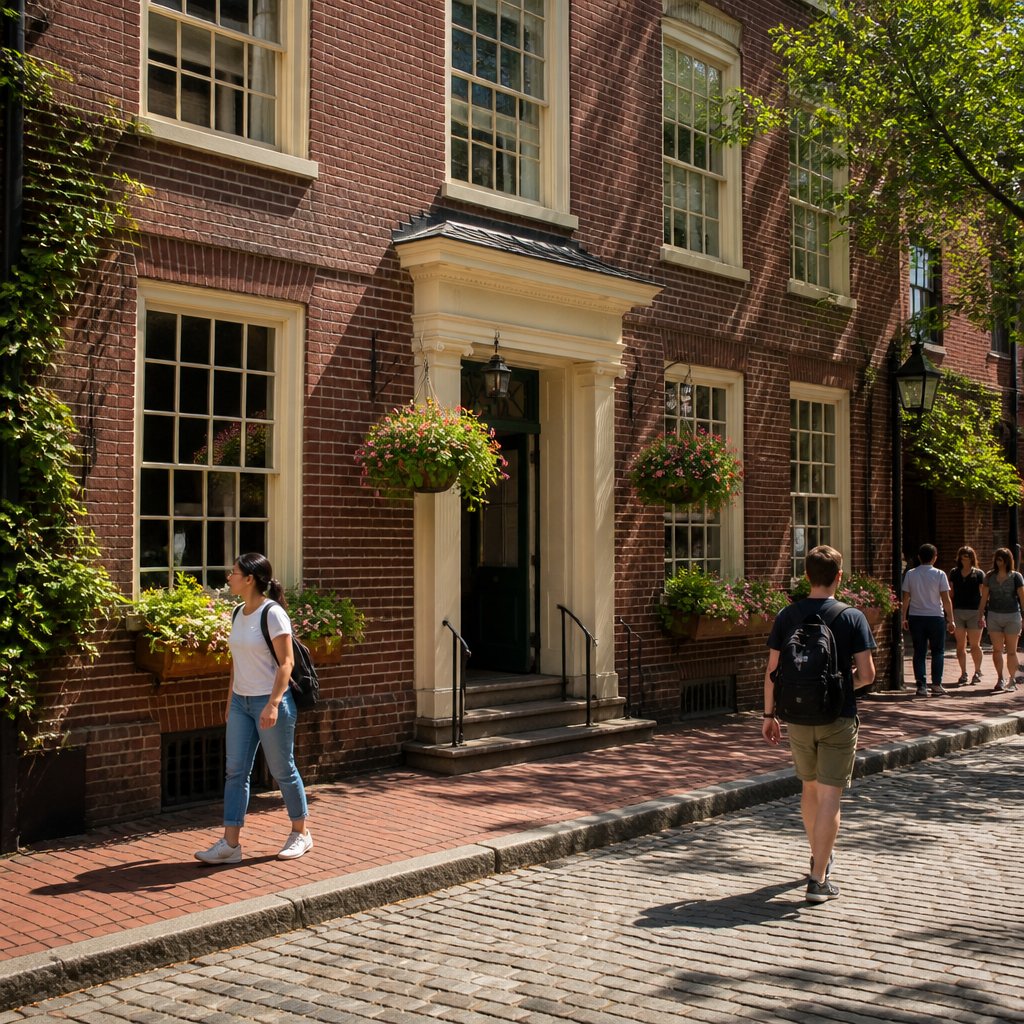
The Green Dragon was not simply a bar; it functioned as both tavern and coffeehouse, a dual identity that made it the most politically significant meeting place in colonial Boston. Daniel Webster, the renowned orator and statesman, called it the “Headquarters of the Revolution,” and the label stuck for good reason. Within its walls, patriots debated the Stamp Act, coordinated the Boston Tea Party, and received the intelligence that triggered Paul Revere’s midnight ride to Lexington and Concord. The building’s upper floors housed the St. Andrew’s Lodge of Freemasons, giving revolutionaries a private, secure space for planning that prying Loyalist ears could not easily penetrate.
Understanding the Green Dragon means understanding how 18th-century coffeehouse culture worked as a social engine. Coffee, ale, news, and argument mingled freely. Merchants, tradesmen, and political agitators shared the same room. That combination turned a brick building on Union Street into the birthplace of American independence.
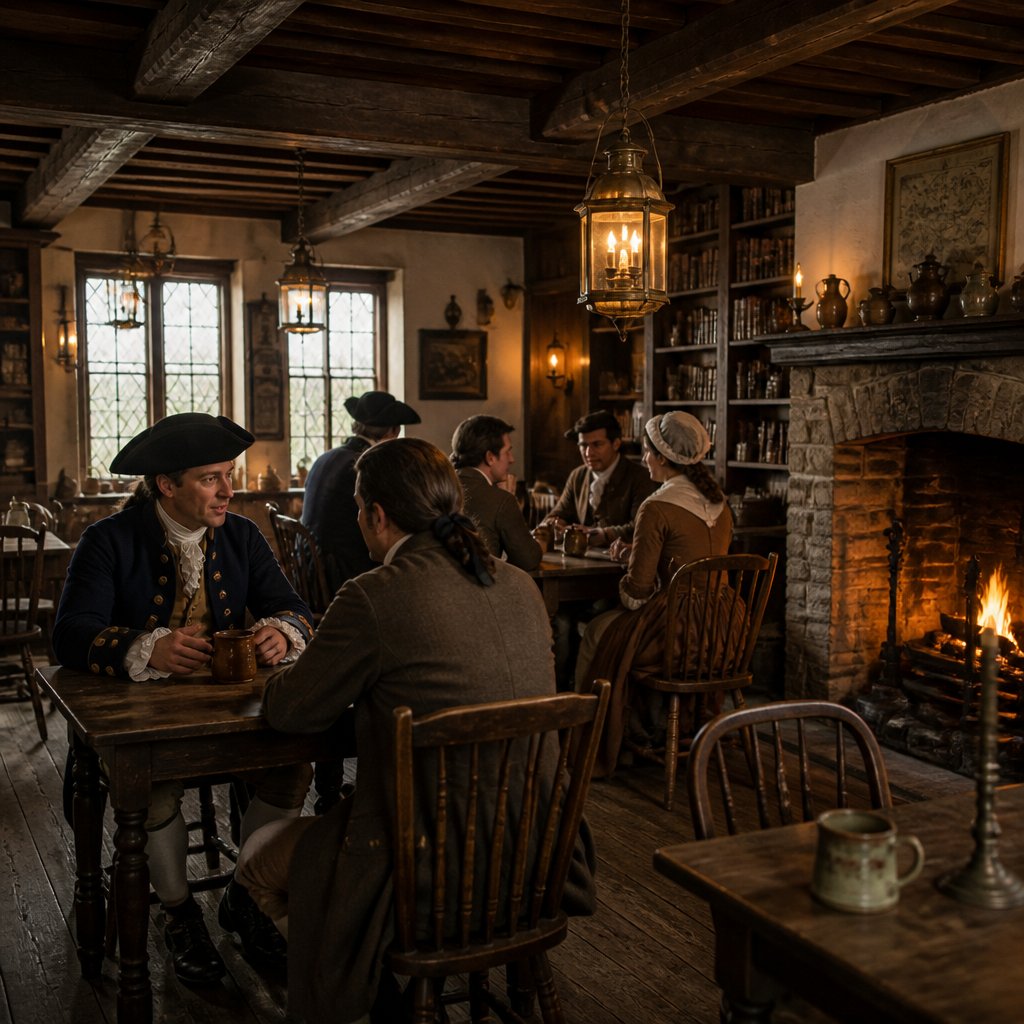
The Green Dragon’s power came from its physical design, its location in Boston’s commercial core, and a coffeehouse culture that made dissent not just possible but inevitable. It blended drink, news, and debate under one roof during decades of escalating tension with Britain.
You need to set aside the modern image of a quiet café. In colonial America, coffeehouses and taverns often overlapped. The Green Dragon served both beer and coffee, attracting a wide cross-section of Boston society. Merchants stopped in for business deals. Sailors brought news from overseas. Tradesmen argued politics over mugs of ale or cups of coffee.
This hybrid model mattered because it kept the room full and the conversation constant. Unlike a private club, the Green Dragon’s ground floor was open to the public. That accessibility meant information moved fast, and ideas reached people who could act on them. By the mid-18th century, the tavern had become the informal clearinghouse for political intelligence in Boston.
Old Boston taverns and tavern clubs were not just social outlets. They were the closest thing colonial Boston had to a free press, a town hall, and a political party headquarters, all rolled into one. Printed news was scarce and expensive. The Boston Gazette circulated, but most colonists got their information through word of mouth in public meeting places.
The Green Dragon sat on Union Street in the heart of the business district. You could walk from the wharves to the tavern in minutes. That proximity to trade, shipping, and government made it a natural hub for protest. When Britain imposed new taxes or restrictions, the reaction often crystallized here before it appeared anywhere else.
Daniel Webster did not use that phrase lightly. By the 1760s and 1770s, the Green Dragon hosted overlapping circles of resistance: the Sons of Liberty, the Boston Caucus, and the St. Andrew’s Lodge of Freemasons. These groups shared members, shared the building, and shared a growing determination to resist British rule.
The tavern earned its title not through a single dramatic event but through sustained, repeated use as a planning hub. Secret sessions happened upstairs in the Masonic rooms. Public debates raged on the ground floor. Intelligence was gathered, sorted, and acted upon. When you look at the major flashpoints of the American Revolution in Boston, nearly every one traces a line back through this building.
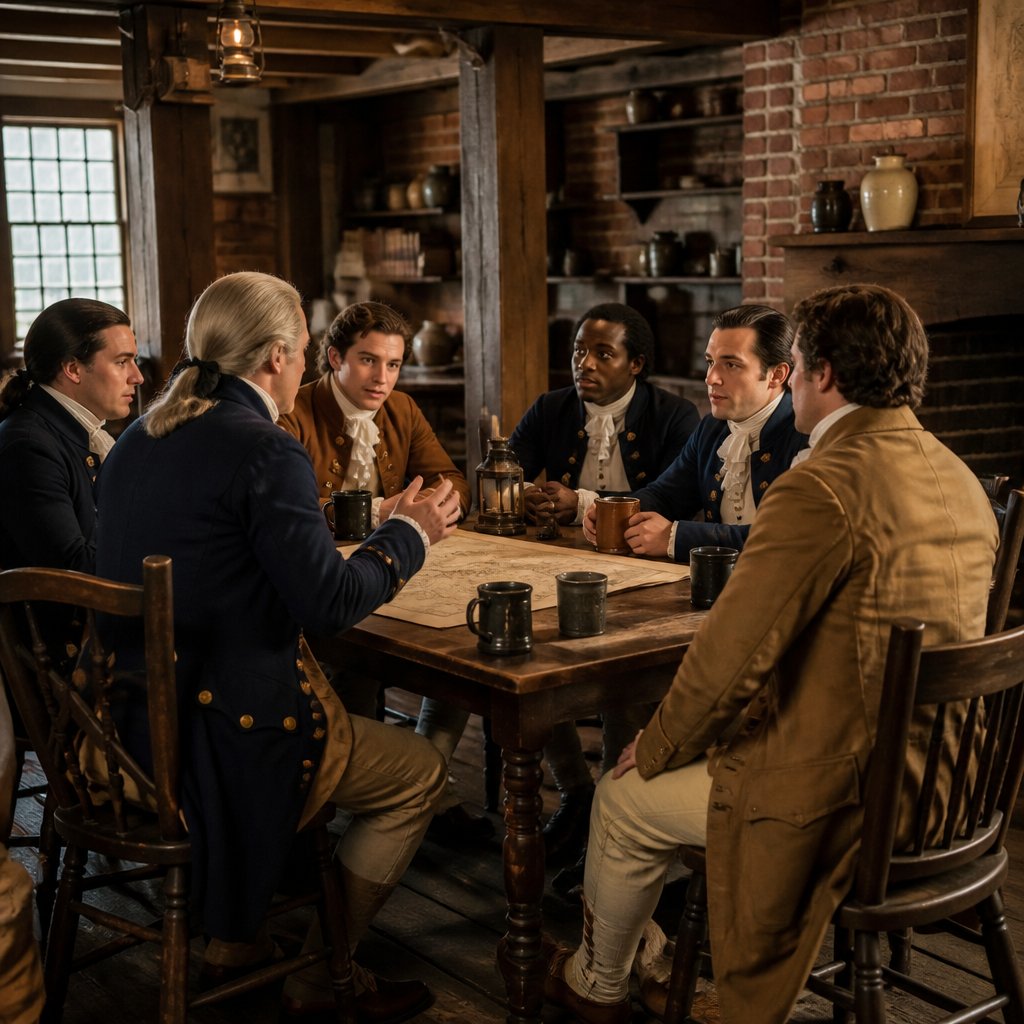
The Green Dragon’s significance was not about the building alone. It was about the people who filled it: Samuel Adams, John Hancock, Paul Revere, Joseph Warren, Benjamin Edes, and dozens of lesser-known organizers who turned grievance into coordinated action.
The Sons of Liberty formed in 1765 to oppose the Stamp Act, and the Green Dragon became one of their primary meeting places. This underground network of patriots organized boycotts, staged public protests, and intimidated British tax collectors. They were not a polite debating society. They were an action-oriented resistance movement.
The Boston Caucus, a political club that had been shaping local politics since the early 1700s, also operated out of the tavern. The Caucus selected candidates, coordinated votes, and directed public opinion. When you combine the Caucus’s political machinery with the Sons of Liberty’s street-level activism, you get a picture of a building where every floor served a revolutionary purpose.
Samuel Adams was the intellectual engine of Boston’s resistance. He argued, wrote, and organized relentlessly, and the Green Dragon gave him a room full of sympathetic ears. John Hancock, one of Boston’s wealthiest merchants, brought financial muscle and social prestige. His brother lived next door to the tavern, making the connection even more direct.
Paul Revere served as a critical link between different patriot groups. A silversmith by trade and a Freemason by affiliation, Revere moved between the Sons of Liberty, the St. Andrew’s Lodge, and the broader network of Boston’s founding fathers. He carried messages, gathered intelligence, and reported back to the Green Dragon. His role as a connector made the tavern’s network far more effective than any single group could have been alone.
Joseph Warren was a physician, a Freemason, and eventually Grand Master of the Massachusetts Grand Lodge. He played a pivotal role in gathering intelligence about British troop movements. It was Warren who sent Revere on his famous ride to warn Hancock and Adams in Lexington. Before that, Warren had spent years attending meetings at the Green Dragon, building the trust and relationships that made rapid action possible.
Benjamin Edes, publisher of the Boston Gazette, was another key figure. The Gazette served as the printed voice of the patriot cause, and Edes attended planning sessions at the tavern. What was debated over coffee and ale at the Green Dragon often appeared in print within days, reaching colonists throughout Massachusetts and beyond.
The Green Dragon’s role evolved in lockstep with the crisis between the colonies and Britain. What began as angry debate over taxes escalated into coordinated acts of defiance and, ultimately, armed conflict.
The Stamp Act of 1765 was the spark that turned the Green Dragon from a gathering place into a resistance headquarters. The Sons of Liberty organized their opposition here, planning boycotts and public demonstrations that forced Britain to repeal the act. That early victory taught the patriots a crucial lesson: coordinated action, planned in private and executed in public, could work.
When Britain passed the Tea Act in 1773, the cycle repeated with even greater intensity. The Tea Act gave the East India Company a monopoly on tea sales in the colonies, and Bostonians saw it as another attempt to enforce taxation without representation. The Green Dragon became the focal point for strategy sessions about how to respond.
The connection between the Green Dragon and the Boston Tea Party of December 16, 1773, is one of the most debated topics in Revolutionary War history. A well-known drawing of the tavern includes the caption: “Where we met to Plan the Consignment of a few Shiploads of Tea, Dec 16, 1773.” A square and compass symbol in the corner of that drawing ties the planning directly to the Freemasons.
To this day, no one knows with certainty who organized every detail. What you can confirm is that the Boston Caucus guarded the tea ships at gunpoint and held secret sessions at the Green Dragon. Joseph Warren accompanied Francis Rotch, the owner of the tea ship Dartmouth, to the Customs House. When negotiations failed, roughly 100 men disguised as Mohawk Indians boarded three ships and dumped 342 chests of tea into Boston Harbor. Many of those men had walked out of the Green Dragon that evening.
In April 1775, intelligence reached the patriot network that British forces planned to arrest John Hancock and Samuel Adams in Lexington and seize colonial munitions stored in Concord. That intelligence was gathered and processed through the Green Dragon’s network.
Joseph Warren received the critical report and dispatched Paul Revere on the night of April 18, 1775. Revere’s ride triggered the alarm system that brought colonial militiamen to Lexington Green and the North Bridge in Concord. The Battles of Lexington and Concord on April 19 marked the start of the Revolutionary War. The chain of communication that made it all possible ran directly through the tavern on Union Street.
The Masonic presence at the Green Dragon was not incidental. It provided the organizational framework, the private space, and the bonds of trust that revolutionary plotting required.
The St. Andrew’s Lodge of Freemasons purchased the Green Dragon building in 1764. The upper floors became the Lodge’s meeting space, while the ground-floor tavern remained open to the public. This arrangement created a building with two identities: a public house below and a private fraternal hall above.
The Lodge also hosted the formation of the Massachusetts Grand Lodge on St. John’s Day in 1769, with Joseph Warren serving as Grand Master. The Green Dragon was sometimes referred to as “Freemasons’ Arms” or “Masons’ Arms,” reflecting how closely the building’s identity had merged with its Masonic occupants.
If you look at the membership rolls, the overlap is striking. John Hancock, Paul Revere, and Joseph Warren all belonged to the St. Andrew’s Lodge. They were also core members of the Sons of Liberty. These were not separate activities for separate men; the same people wore both hats, often on the same evening.
Masonic bonds carried a built-in code of secrecy and mutual obligation. When you needed to plan an act of resistance that could get you hanged for treason, those bonds mattered. The Lodge provided a framework of trust that informal tavern friendships alone could not guarantee.
The physical layout of the Green Dragon made it ideal for clandestine work. The public tavern on the ground floor provided cover. Anyone could walk in without attracting suspicion. The Masonic rooms upstairs, accessible only to Lodge members, offered genuine privacy.
This two-tier structure meant that patriots could gather publicly, gauge the political mood, exchange news, and then retreat upstairs for serious planning. Loyalist spies could sit in the tavern all evening and never know what was being decided above their heads. The building’s architecture, in short, was an asset to the revolution.
The Green Dragon was not just a name. It was a specific building, on a specific lane, marked by one of the most recognizable signs in colonial Boston.
The tavern stood on Union Street, near Hanover Street, in what was then Boston’s North End commercial district. Green Dragon Lane ran alongside the property, and the name stuck to the surrounding area. If you walk this neighborhood today, you can still trace the old street grid, though the buildings have changed entirely.
Union Street placed the tavern at the crossroads of trade, shipping, and civic life. The wharves were a short walk east. The town’s markets and counting houses surrounded it. That central location made the Green Dragon accessible to every class of Bostonian.
The Green Dragon’s origins reach back to the mid-1600s, with some accounts dating the establishment to as early as 1654. By 1712, it was operating as a public house. The property passed through several owners before the St. Andrew’s Lodge acquired it in 1764.
Dr. William Douglas, a Scottish-born physician and writer who lived in Boston in the early 18th century, was among the notable figures associated with the property’s early history. Douglas was known for his sharp opinions on colonial medicine and politics, fitting the profile of the educated, opinionated clientele that coffeehouses attracted throughout the colonial period.
Most colonists could not read, so taverns identified themselves with visual signs. The Green Dragon’s sign was a copper sculpture of a dragon mounted above the door. Boston’s salt air quickly corroded the copper to a bright green patina, and the owners never bothered to polish it. The name stuck.
The building itself was a large, three-story colonial-style brick structure. The ground floor held the public tavern. The upper floors housed the Masonic Lodge rooms. Visitors in the 18th century would have seen a sturdy, functional building, not a grand monument. Its importance came from what happened inside, not from architectural flair.
The original Green Dragon is gone, but its role in American history has kept its name alive for nearly two centuries after the building’s destruction.
The Green Dragon Tavern operated on Union Street until 1832, when fire destroyed the structure. By that time, the building had already served its most consequential purpose. The Masonic Lodge had moved its meetings to the Exchange Coffee House in 1818, and the tavern’s revolutionary-era patrons had long since passed into history. No attempt was made to rebuild the original structure.
In 1993, the Massachusetts Society of the Sons of the Revolution placed a commemorative plaque near the original site. The inscription reads, in part: “The secret meeting place of the Sons of Liberty and in the words of Webster the Headquarters of the Revolution.” The plaque was placed to restore the tavern to its “rightful place on Boston’s Freedom Trail.”
Today, a modern establishment bearing the Green Dragon name operates nearby, though it occupies neither the same building nor the exact same location. A historical marker connects the current site to the original tavern’s legacy.
If you visit Boston in 2026, you will find the Green Dragon name attached to a working pub near Union and Marshall Streets. The modern Green Dragon Tavern serves lunch and dinner, offers live entertainment, and leans into its revolutionary heritage. It is a popular stop for Freedom Trail visitors looking to dine in a space that echoes, if not replicates, the original.
Boston treats the site as a living piece of its identity. The city’s broader Freedom Trail narrative depends on places like the Green Dragon to anchor abstract history in physical space. When you stand on Union Street and picture Samuel Adams debating strategy over a mug of ale, you are engaging with the kind of place-based storytelling that Boston does better than almost any American city.
The Green Dragon Tavern operated on Union Street in Boston from at least 1712 until 1832. It served as both a public tavern and coffeehouse, and its upper floors housed the St. Andrew’s Lodge of Freemasons. Daniel Webster called it the “Headquarters of the Revolution” because the Sons of Liberty, Paul Revere, Samuel Adams, and other patriots used it as their primary meeting place to organize resistance to British rule, including planning tied to the Boston Tea Party and the intelligence that triggered Paul Revere’s ride.
The original Green Dragon Tavern stood on Union Street, near Hanover Street, in Boston’s North End. The current establishment that bears the Green Dragon name is located near the intersection of Union and Marshall Streets. It is not the same building and does not occupy the exact original location.
The original building was not relocated. It was destroyed by fire in 1832. A modern pub bearing the Green Dragon name was established near the original site and received a historical marker in 1993. The current tavern is a tribute to the original, not a reconstruction or relocation of the historic structure.
The modern Green Dragon Tavern offers a full lunch and dinner menu featuring Irish-American fare alongside traditional New England seafood dishes. You can expect pub staples like fish and chips, chowder, burgers, and a selection of draft beers. The menu caters to both tourists visiting the Freedom Trail and local regulars.
You can find photos of the modern Green Dragon Tavern on travel review platforms, Boston tourism sites, and the tavern’s own social media channels. Historic illustrations of the original building, including the famous drawing with the square and compass symbol referencing the Boston Tea Party, are available through museum archives and Masonic historical collections.
Reviews of the modern Green Dragon Tavern typically praise its historic atmosphere and location along the Freedom Trail. The food receives generally positive marks for solid pub fare, with New England clam chowder and seafood dishes frequently highlighted. Some reviewers note that it can get crowded during peak tourist hours, so visiting during off-peak times tends to provide a better experience.

The Ho Tai Cold Brew System
turns cold-steeped craft coffee
into same-day smooth, cafe'
quality coffee right on your
countertop.